
ArtForecast
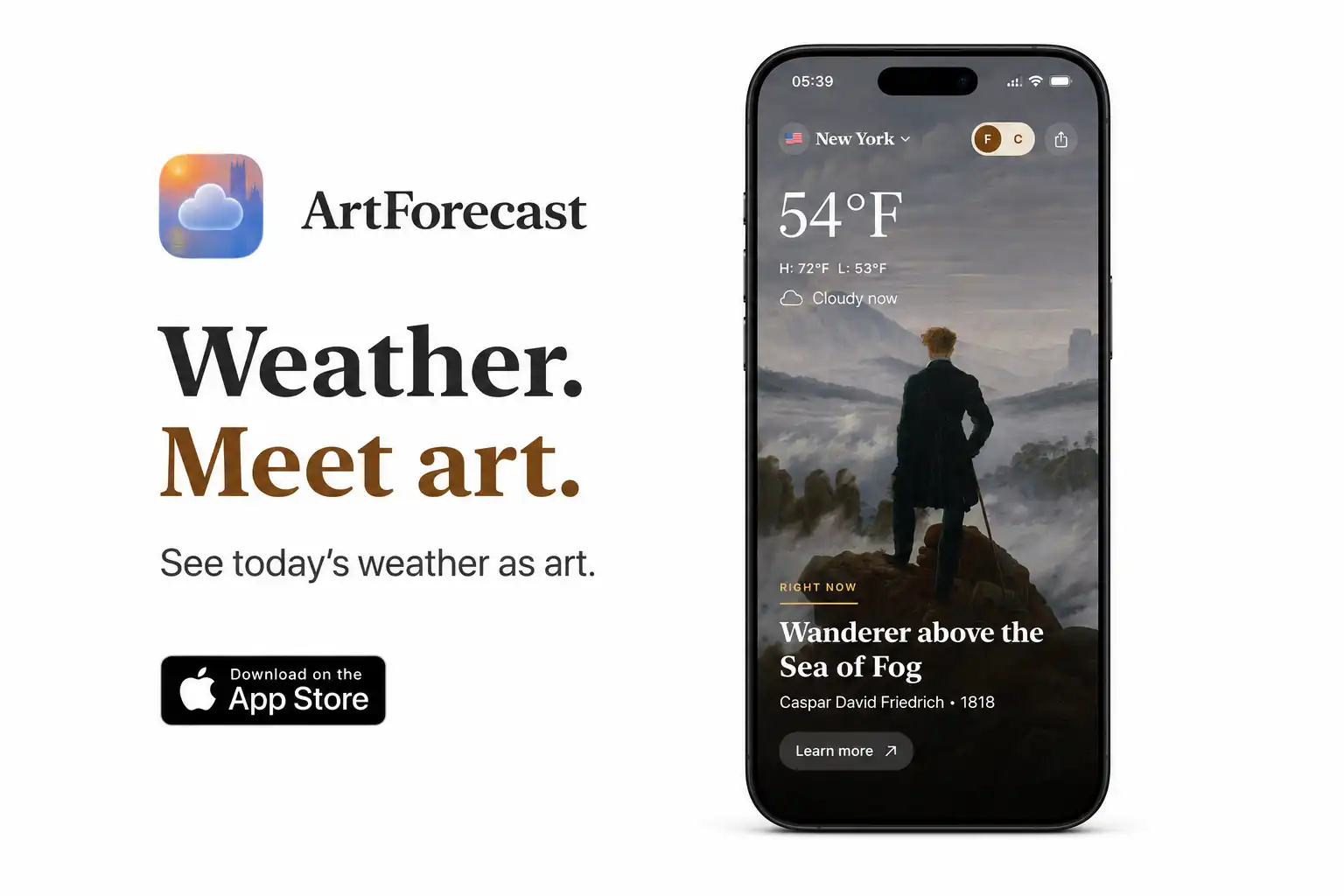
A playful weather app that transforms current conditions into curated artwork, turning a daily forecast into a small moment of discovery.
Project brief
Why I started
I wanted to practice shipping faster, build something delightful, and explore how weather data could be translated into an emotional and visual experience.
Timeline
The project began as a two-week shipping experiment focused on building a small, polished mobile app with a deliberately constrained feature set and a clear release target.
What I learned
Limiting scope created momentum. By focusing on a single core interaction instead of endless possibilities, it became easier to move from idea to launch.
Experiment notes
ArtForecast started with a simple question: what if the weather felt more inspiring than informative?
Most weather apps focus on numbers, forecasts, and utility. While useful, they rarely create an emotional connection to the day outside.
I wanted to experiment with a different approach.
Instead of presenting weather as data, ArtForecast translates current conditions into artwork. A rainy morning might surface a moody landscape. A bright summer afternoon could reveal something vibrant and energetic. Each piece is paired with a short explanation that connects the artwork to the weather being experienced in that moment.
The goal was intentionally modest:
- translate weather conditions into artwork
- create a calm, full-screen viewing experience
- generate simple shareable cards
- ship quickly without expanding scope
More than anything, this project is an exercise in finishing.
It is easy to spend months planning larger products, adding features, and chasing perfection. ArtForecast exists as a reminder that small ideas can be valuable when they are actually released.
The deeper purpose of the experiment is not whether the app becomes a business. It is reinforcing the habit of shipping:
- build quickly
- keep the scope small
- publish real things
- learn from actual users instead of assumptions
If even a handful of people smile when they open the app and think, “that’s pretty cool,” then the experiment has done its job.