BopoSounds
An interactive soundboard for learning Zhuyin and Mandarin pronunciation through audio, reference details, and focused listening practice.
Project brief
Why I started
I wanted a more direct way to connect Zhuyin symbols with their sounds and turn pronunciation study into something tactile, repeatable, and easy to revisit.
Timeline
BopoSounds began as a focused React experiment and grew into a compact learning tool with a complete symbol reference, listening quizzes, and tone-pair practice.
What I learned
Language tools become more useful when reference material and active recall live in the same experience. Immediate audio feedback makes short practice sessions easier to repeat.
Experiment notes
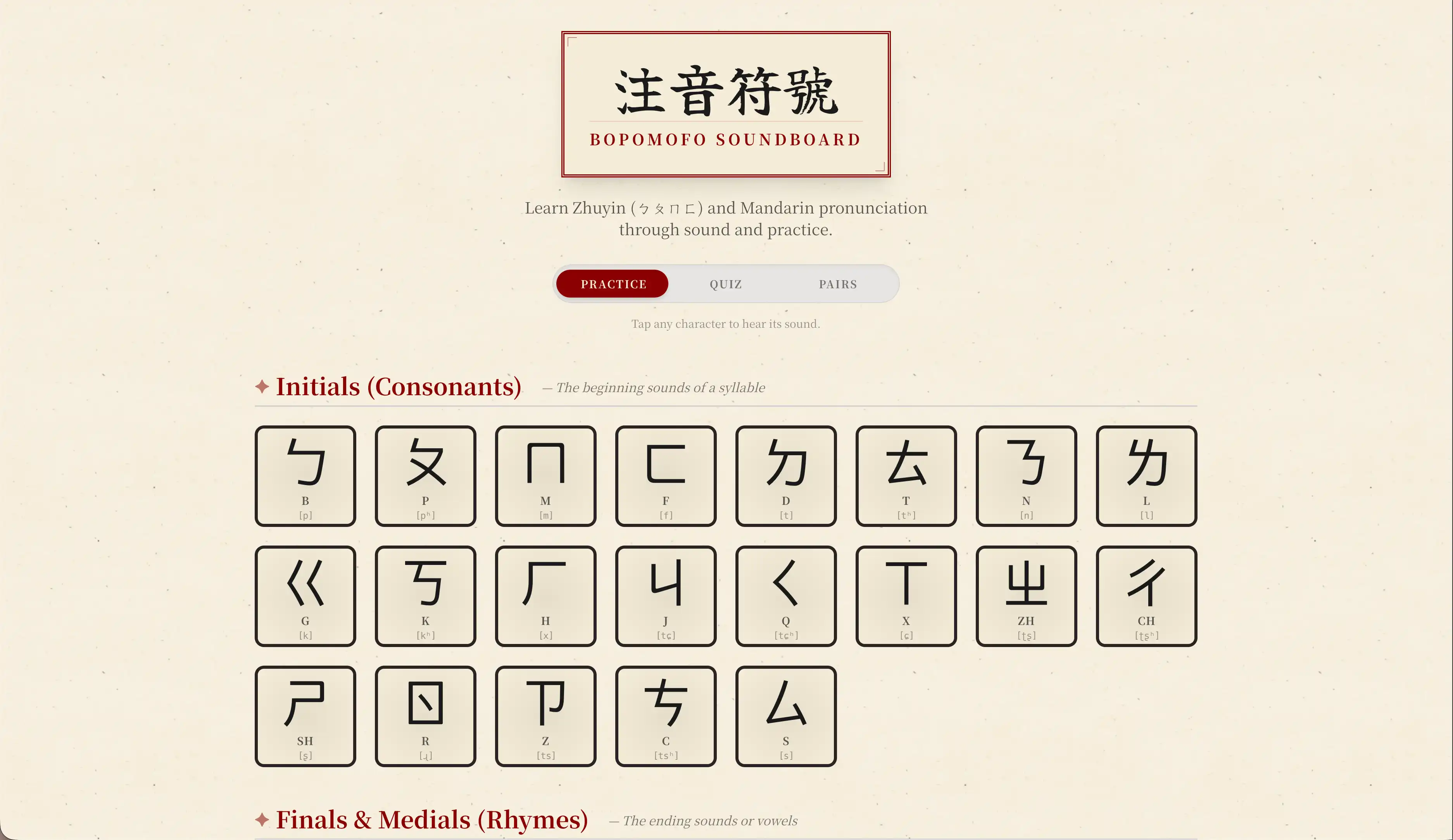
BopoSounds is a small learning tool built around the sounds of Zhuyin, also known as Bopomofo.
Zhuyin is a phonetic system used in Taiwan to teach and represent Mandarin pronunciation. Learning the symbols is only one part of the process; the harder step is connecting each character to a sound quickly and confidently.
The project brings those pieces together in one place:
- a soundboard organized by initials and finals
- audio playback for individual Zhuyin symbols
- pinyin, IPA, and pronunciation descriptions
- listening quizzes that ask you to identify a character
- tone practice built around minimal pairs
The interface is intentionally focused. Instead of adding lessons, accounts, streaks, or a large curriculum, BopoSounds concentrates on the repetition loop: see a symbol, hear its sound, and test recognition.
Building the project also reinforced the value of making learning tools for a specific personal need. A narrowly scoped utility can be more useful than a broad platform when it removes friction from something you already want to practice.
BopoSounds remains a practical companion for studying Mandarin pronunciation and a small experiment in turning reference material into an active learning experience.